
Move removes the jail from TCJS inspections and compliance requirements, but any future reopening would be treated as “new construction,” potentially triggering costly upgrades and delays.
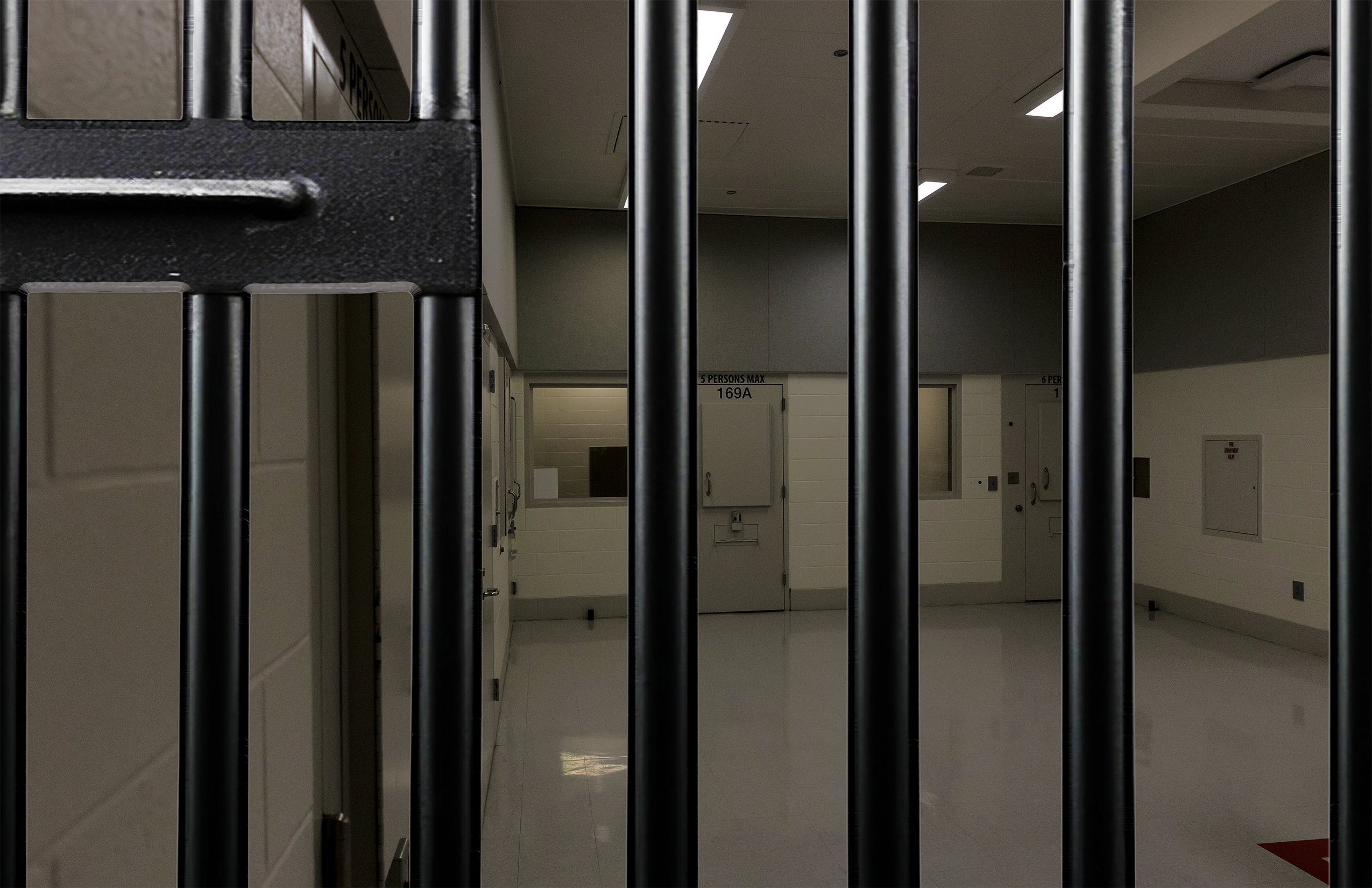 Fisher County Commissioners voted last week to officially decommission the county jail, changing its status under the Texas Jail Commission, ending state oversight, and shifting any future reopening of the facility into what officials described as “new construction” territory under TCJS standards.
The decision followed an extended discussion during the Dec. 8 Commissioners Court meeting over whether the jail should remain depopulated — without inmates but still on the state’s roster — or be fully decommissioned and removed from Texas Jail Commission oversight. Sheriff Pat Dickson informed the court the distinction between the two would have long-term consequences for cost, inspections, and the county’s ability to reopen the jail in the future.
DEPOPULATED VERSUS DECOMMISSIONED (CLOSED)
Dickson explained to the court that a depopulated jail remains subject to annual inspections and minimum compliance requirements, even if it is not housing inmates. Decommissioning, by contrast, removes the jail from the Texas Jail Commission roster entirely and eliminates those inspection requirements.
The tradeoff, Dickson said, is that if a decommissioned jail is later reopened, the state would treat it as a new facility rather than an existing one. That would require the building and its systems to meet whatever standards are in place at that time, rather than allowing the county to reopen quickly under existing approvals.
“If we allow it to remain in noncompliant status and decommission the jail, and at a later date someone wants to reopen it, then the Texas Jail Commission will look at it as if it is a new construction,” said Dickson, “which could cause delayed time in opening the jail and cost quite a bit of money.”
The discussion was not about reopening the jail, Dickson emphasized, but about whether the county wanted to preserve the option of reopening it without triggering far more extensive upgrades later.
COMPLIANCE COSTS AND FUTURE RISKS Maintaining the jail in a compliant but depopulated status would still require routine inspections and upkeep, including health inspections for the kitchen, fire marshal inspections, maintenance of the fire suppression system, and inspections of the facility’s fire panel. If those inspections were kept current, the jail could remain compliant at a relatively modest annual cost, barring major system failures.
A Texas Commission on Jail Standards special inspection conducted in June found the Fisher County Jail out of compliance on three life-safety requirements: routine emergency power testing, quarterly fire prevention checks, and an annual certified fire inspection. The notice cites missed testing/ inspection timelines stretching back to 2023– 2024 and requires corrective action immediately, with a written response to TCJS within 30 days.
This also prompted the TCJS to send a formal letter to the county, requesting that Judge Holt and Sheriff Dickson appear before the commission to discuss the ongoing issues and the Fisher County Law Enforcement Center’s uncertain future.
Dickson also warned the court that several systems inside the jail are aging, including the camera system, which was discussed during a previous meeting. According to Dickson, that system is nearing the end of its operational life, and replacement costs were estimated at roughly $500,000. While that expense would not be required simply to maintain compliance, it would likely become unavoidable if the jail were ever reopened under new construction standards.
In a letter Dickson previously provided the court, he explained how decommissioning the jail would eliminate inspection requirements and related costs in the short term but could expose the county to substantially higher expenses if officials later decide to bring the jail back into operation.
QUESTIONS OVER INSPECTIONS AND NONCOMPLIANCE
During the meeting, Commissioner Micah Evans sought clarification on the jail’s current status, confirming that it was depopulated rather than decommissioned. County Judge Ken Holt noted that simply defunding the jail did not legally close it, a point the county learned after the Texas Jail Commission required Holt and Dickson to attend its November meeting to explain ongoing noncompliance issues.
“Just so that everyone knows, on November the 6th the sheriff and I were summoned out to Austin Texas to explain this because we were still in noncompliance,” said Holt. “Just by not funding it did not close the jail, which just arrived on us.”
Dickson told the court that when the jail was depopulated and staffing ended, no system was put in place to track upcoming inspections. As a result, required inspections lapsed, including health and fire marshal inspections, leading to findings of noncompliance when the Texas Jail Commission later reviewed the facility.
Commissioner Stuart Posey questioned why systems that were not in use still required maintenance. Dickson and others explained that many inspections are tied to the building itself rather than inmate occupancy.
CHALLENGES TO COST ESTIMATES AND HISTORICAL CLAIMS County Auditor Becky Mauldin challenged some of the lower-end cost estimates discussed during the meeting, particularly suggestions that certain inspections could be maintained for only a few hundred dollars annually. Mauldin told the court that bills associated with the Law Enforcement Center had rarely, if ever, come in that low, and said inspection-related expenses were typically higher once travel and multiple agencies were involved.
“That sounds a little low, Sheriff. I’m sorry,” said Mauldin, in response to the projected cost for health and safety inspections. “I think the bill’s never been lower than $1,500.”
Mauldin also stated during the discussion that the jail had only been open “maybe six months” since it was built.
However, DMC archives and state records suggest a more complex history. Since opening in 2016, the jail has experienced multiple periods of depopulation and reopening. How long the jail has been “open” depends largely on how the term is defined — whether it refers to continuous inmate housing, full staffing, or basic operational readiness.
It was populated for roughly three years after opening its doors in 2016 before its first brief closure in 2019. It reopened for several months before closing again during 2020 and was again populated with inmates and fully operational from Oct. 2021 until depopulated for the last time in Aug. 2023.
While some officials described the jail as a “money pit” during discussion, county financial records and recent audit reporting complicate that characterization. During its May 2025 meeting, Robertson & Magee CPA Cara Hilbrich presented the county’s annual financial report, which showed a $1.9 million increase in net position, driven largely by interest income and expenditures coming in below budget.
During that presentation, Hilbrich told the court that investment earnings far exceeded expectations, with roughly $400,000 earned in the general fund alone, compared to just $76,000 budgeted. County officials ended the last fiscal year with more than $7 million in fund balance and a surplus exceeding $1 million, as previously reported by the Chronicle.
Treasurer Jeanna Parks reported the county closed April — just prior to Hilbrich’s May report — with more than $10.5 million in reconciled funds, much of it placed in high-interest money market accounts generating returns above 4%. Parks said the county earned nearly $38,000 in interest in April alone.
Even with interest earnings on the jail bond I&S account down from their spring peak, the fund still brought in about $1,188 in November alone and now holds more than $431,000 dedicated to jail debt service. In that same month, the county’s TexPool money-market account generated roughly $23,000 in interest.
Those interest earnings are used to service long-term debt obligations such as the Law Enforcement Center and have routinely exceeded the facility’s basic operating and utility costs, undercutting claims that the jail has been a consistent financial drain.
SPLIT VOTE TO DECOMMISSION
Although Commissioner Evans initially urged the court to table a vote until more thorough financial numbers could be presented, and a few plans for action could be considered, it was Commissioner Gordon Pippin that made a motion to decommission the jail.
“There’s no use in tabling. I’m going to make a motion to decommission it. That’s how I feel about it,” said Pippin. “It’s just a ‘money pit,’ and it costs way too much to keep going.”
The motion was seconded by Commissioner Dexter Elrod. The court voted 3–1 in favor of decommissioning, with Pippin, Posey, and Elrod voting in support. Evans cast the lone vote against the motion.
With the vote, the Fisher County jail will be removed from the Texas Jail Commission roster. The sheriff’s office and dispatch operations will continue to operate out of the Law Enforcement Center, but the jail portion of the facility will no longer be maintained for compliance under state jail standards.
POST-MEETING PERSPECTIVES In post-meeting interviews, commissioners and law enforcement officials offered differing views on the decision.
Commissioner Pippin — the only commissioner seated on the court at the time the 1928 jail was forced to close in 2013 — has argued both in favor and against the jail during its 10 years of operation. He said he voted to decommission the current facility because he no longer believed it was the best use of tax dollars.
“You're sitting here spending all this money for something that we're not using?” said Pippin. “So why spend more money for something you're never going to use? You can't get enough employees to run it.”
Posey said he supported decommissioning because the jail has struggled to operate consistently for years and reopening it later would require significant investment regardless of when the decision was made. He acknowledged uncertainty about the future use of the building but said he believed the county could address those questions later.
“The data center, Bitcoin, solar panels, that money should help pay for the job eventually,” said Posey. “I think that it'll work out whenever it comes a time to reopen it if it needs to reopen.”
Evans added that he was not opposed to decommissioning in principle but objected to doing so without a clear plan for the facility. He said his preference was to table the issue until the county could evaluate costs, explore potential uses for the building, and determine whether repurposing or selling the structure was feasible.
“Now they're going to have to figure out a plan because we need to get a building vacant to be able to have it up to be able to sell a building if it's decommissioned,” said Evans, who is not seeking re-election. “I was taught you don't act until you have a plan. That's why I wanted to table it to see numbers, to see if somebody could put a plan together to be able to move forward.”
Deputy Robert Castilleja, who is also a candidate for sheriff in the upcoming election, said the jail had been “poorly managed” in the past and that mismanagement had shaped much of the court’s thinking. He said he believes the facility could function if properly managed but wished commissioners had waited for clearer financial data before making a final decision.
“With the proper management, as in any business you know, proper management, knowledgeable management, that's what makes businesses thrive,” said Castilleja. “As one of the commissioners stated, I wish they would have waited until there were some hard numbers to show, you know, one way or the other.”
WHAT CHANGES — AND WHAT DOESN’T
Decommissioning the jail ends state jail inspections and compliance requirements, but it does not eliminate the building or its ongoing utility and maintenance costs. The Law Enforcement Center will continue to house the sheriff’s office and dispatch operations.
Any future effort to reopen the jail would require state approval and could involve extensive upgrades to meet current standards, costs that commissioners acknowledged remain uncertain. For now, the court’s vote settles the jail’s regulatory status but leaves broader questions unresolved, including the long-term use of the facility and whether the county will compile a detailed operational plan for the building or the department’s future.