
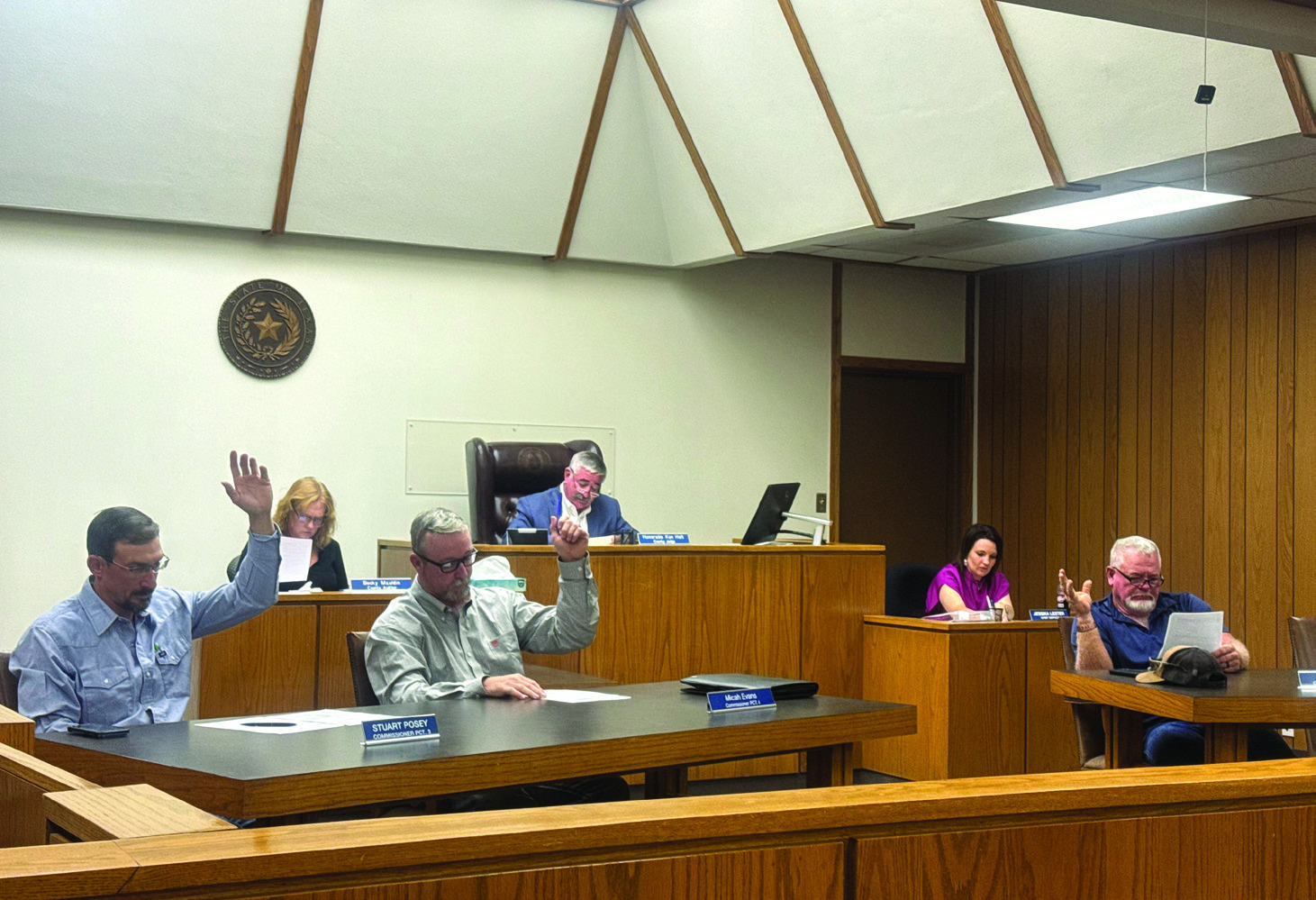
The Fisher County Commissioners Court formally adopted the 2025-26 county tax rate on Monday, September 29, finalizing its budget process just before the start of the new fiscal year. The vote followed several weeks of discussion and a temporary delay earlier in the month, when officials discovered an error in the county’s published tax rate notice.
At its September 8 meeting, the court had approved the new budget and a 5% costof- living adjustment for county employees but postponed adopting the tax rate after County Auditor Becky Mauldin identified a discrepancy in the printed levy information.
Although the rate itself was correct, the error appeared in the public notice and required republication to comply with state law.
Officials said the county used the opportunity to double- check every figure before reposting. “The voter-approval rate is actually lower than the no-new-revenue rate,” Mauldin explained during that meeting.
“It’s the lowest rate the county could adopt.”
Commissioner Micah Evans said tabling the item was the right call to protect the county’s transparency and compliance record. “That way we can run it and be 100% legal on what we’re doing,” he said.
Once the corrected notice appeared in print, the commissioners reconvened for a special meeting on September 29 and unanimously approved the final tax rate. The decision capped off a budget season defined by pay adjustments, infrastructure priorities, and continued efforts to stabilize county operations after several years of inflation and workforce shortages.
Earlier in September, the court had agreed to fund one additional full-time road hand for each precinct, expanding the county’s road and bridge workforce to help maintain more than 700 miles of rural roadway. Each new position carries an estimated annual cost of about $56,700 when factoring in pay, benefits, and insurance, bringing the total increase for the four precincts to roughly $227,000.
Commissioners said the additional personnel will allow for better coverage and reduce the strain on existing crews.
The move followed months of budget talks where officials weighed overtime costs and part-time staffing challenges against available revenues.
Despite the new expenses, the county expects to end the fiscal year with a small surplus.
The final budget also maintains the 5% cost-of-living increase approved earlier this summer. County Judge Ken Holt said the raise was meant to help offset inflation while keeping Fisher County competitive with nearby jurisdictions.
At the September 29 meeting, Mauldin also presented a series of budget amendments to correct shortfalls in the Sheriff’s Department. The changes covered communications, retirement, and overtime expenses, as well as an $18,000 correction to properly allocate an administrative assistant’s pay.
“The position was already being paid, but it wasn’t budgeted correctly in that department’s line item,” Mauldin explained.
“This amendment fixes that so the Sheriff’s Office doesn’t end up short in its overall budget.”
Commissioners approved the amendments without objection, ensuring that department budgets remain balanced through the fiscal year’s end.
The court also authorized the purchase of new protective vests and safety gear for deputies at a cost of $9,586.70, paid from remaining SB22 grant funds. Sheriff Pat Dickson said the order replaces an earlier purchase from another vendor that failed to deliver as expected. The purchase uses up the last of the state grant before it expires.
The county’s newly adopted tax rate of $0.554359 per $100 valuation maintains Fisher County’s long-standing practice of adopting a rate necessary for supporting key services and debt obligations. The rate includes allocations for maintenance and operations, road and bridge, and interest and sinking.
With both the budget and tax rate now in place, the commissioners closed out a months-long process that began in mid-summer. The 2025–26 budget took effect October 1 and positions Fisher County to continue its operations with modest pay raises, expanded road crews, and steady revenues heading into the new fiscal year.