
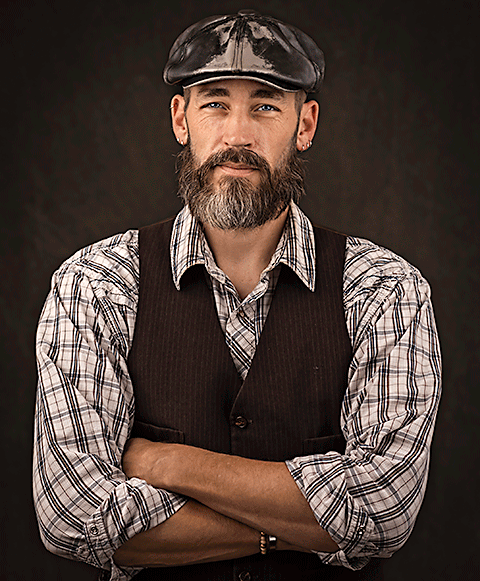
Editorial
From time to time, readers of this column ask how I keep from losing my mind with frustration, as the moments when I neither have a strong opinion about something nor am ticked off about something else are seemingly rare. While the grade of my sanity is still under review, I think my low-level lunacy is because the marbles I’m holding onto are stored in my FannyPack of humorous analogies.
Whether it is through comparing recent public proceedings to reality television or using British satire as an analogy for political behavior patterns, I am fortunate enough to stumble across humorous connections that help soften the blow of otherwise aggravating levels of foolishness.
One of the most persistent of these I face — admittedly on a wide spectrum — are issues relating to transparency, followed in a close second by accountability. Our founding fathers knew this would be true of any government, which is why the first amendment made to our Constitution was for the protection of a free press, which will help to share information to hold officials accountable. In fairness, the aversion to sharing uncomfortable truths and admitting shortcomings is a shared quality among humans, not something unique to those elected to office. However, what we should expect from those we elect is a willingness to sacrifice their comfort, have those conversations, admit mistakes, and continuously work toward improvement.
That’s what most of them promise. “I’ll demand accountability.” “We need to hold those officials accountable for the decisions they’ve made in the last four years.” … Rare is the politician who delivers on that promise.
What we get instead is akin to the character of King Arthur in the movie Montey Python and the Holy Grail. Those familiar with the movie will be quoting their favorite scenes with friends after reading this editorial. Whether you’ve seen the movie or not, let me explain.
In one of the funniest opening scenes in cinematic history, Arthur is looking for knights to join him at Camelot, where he meets a castle guard who is skeptical of Arthur’s answers to questions about coconuts. Arthur tries to persuade with rhetoric about birds, but after the guard also showed a deep understanding of ornithology, Arthur becomes frustrated and leaves.
Arthur also becomes equally aggravated after a mis-gender-identified man with a deep understanding of civics, systems of government, and philosophy of governing accuses him of oppression. In the scenes that follow he gains his first follower by assisting Sir Bedevere to apply questionable scientific methods to prove a woman was a witch.
After assembling the knights, Arthur later encounters the rude obstinance of the French, where he shouts the phrase, “Run away!” This is repeated throughout the movie during challenging situations and is often the phycological default for most public officials.
While there is a humorous message in the movie’s “Rabbit of Caerbannog” scene that Fisher County officials could take to heart about the dangers of attacking an unsuspecting opponent that defends itself with extreme ferocity, I will refrain from elaborating on that front in this editorial.
Although for the sake of contextual relevance, and a good laugh, here's a link to the clip on YouTube. Monty Python The Holy Grail - The killer bunny - https://www.youtube.com/ watch?v=tgj3nZWtOfA So much for perceived weakness. I could continue with comparisons throughout the movie, explaining how the Knights Who Say Ni represents the frustrations of grant funding programs, but I have probably done enough to taint 1970’s British humor with current American reality.
If you’ve seen the film, you will probably never watch it the same again. My wife — who isn’t a fan — might have a reason to give it a second viewing, and for those who haven’t seen it, now you have a reason to pop some popcorn. It will give you something to watch between episodes of your favorite public meeting.