
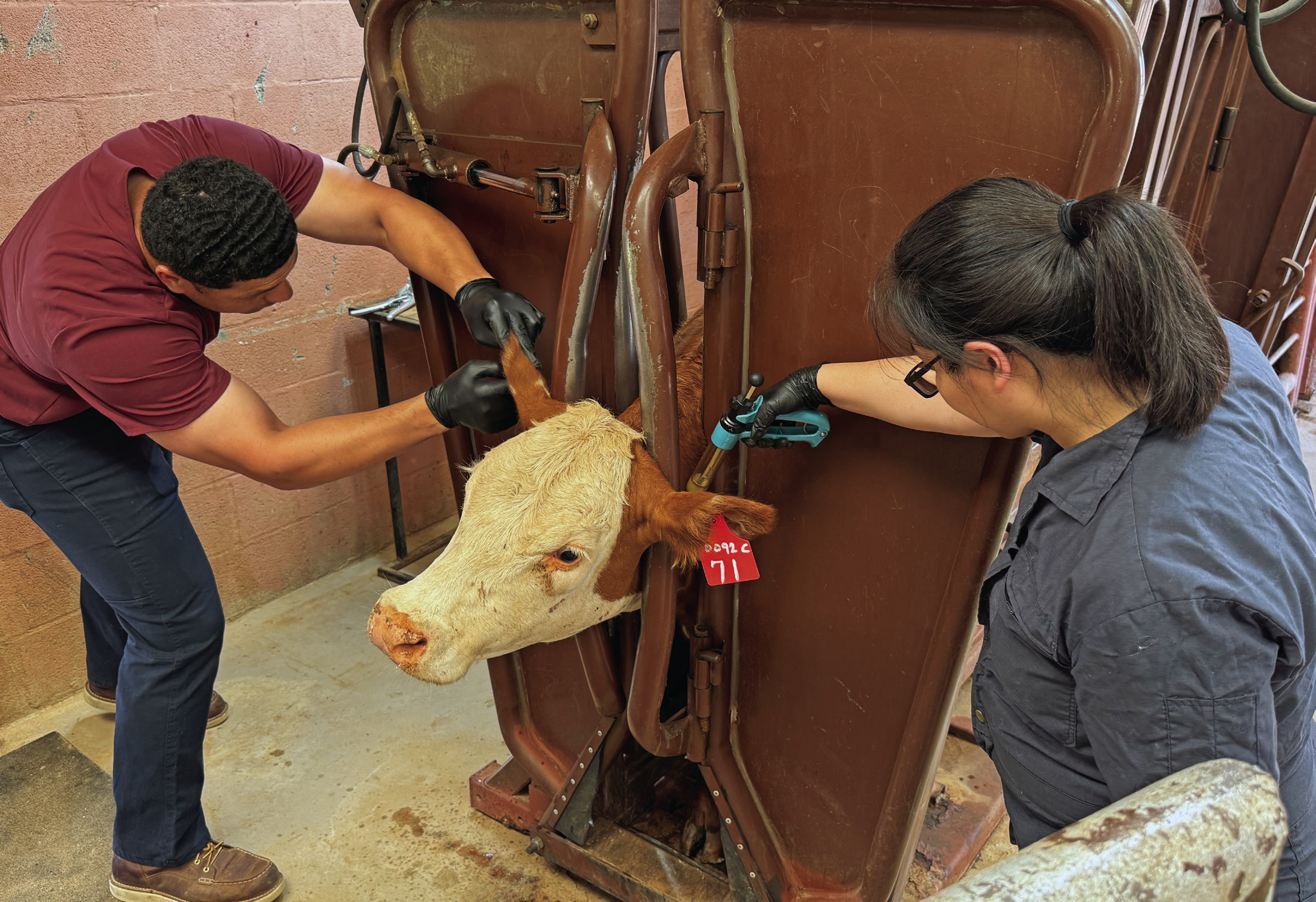
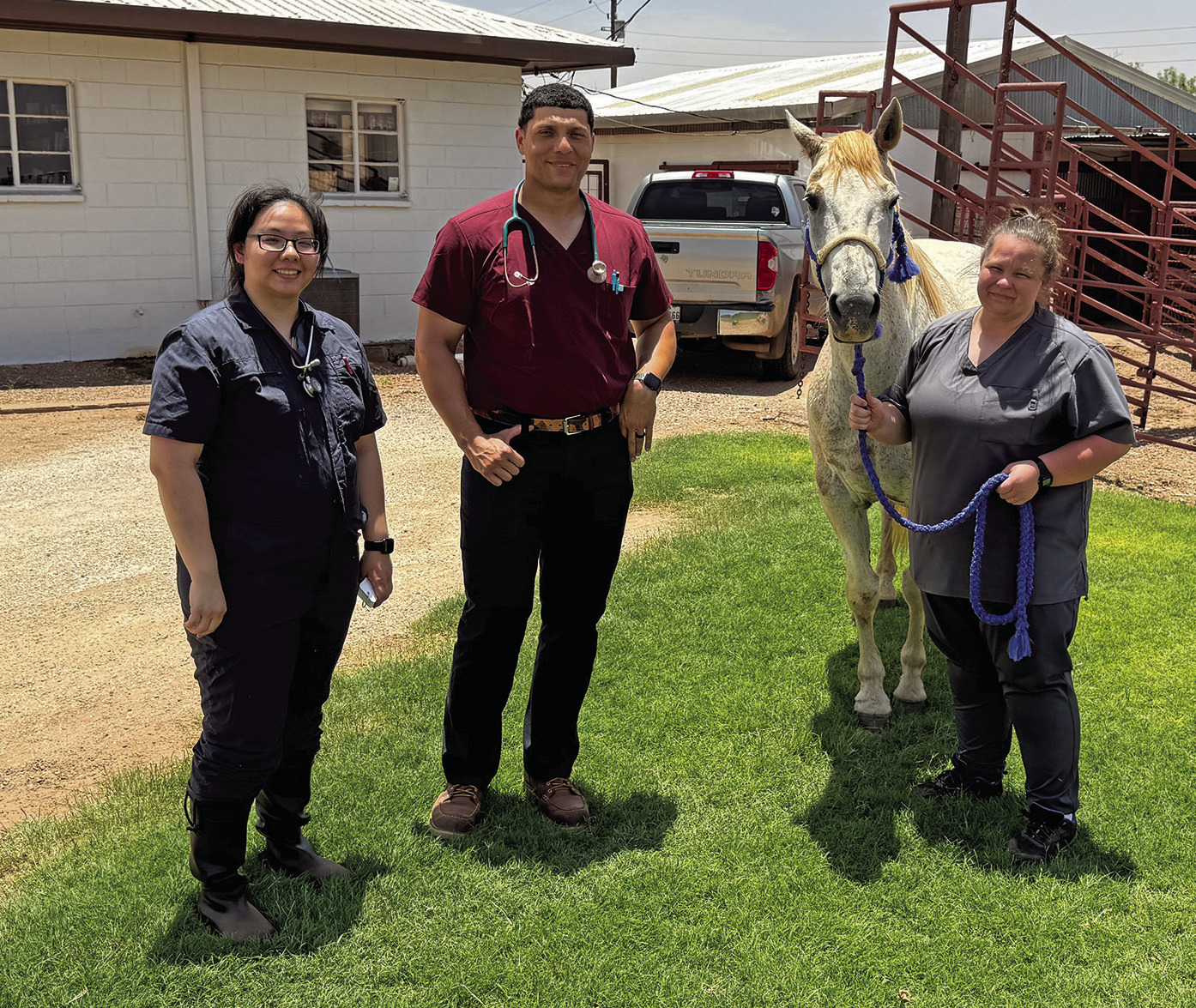
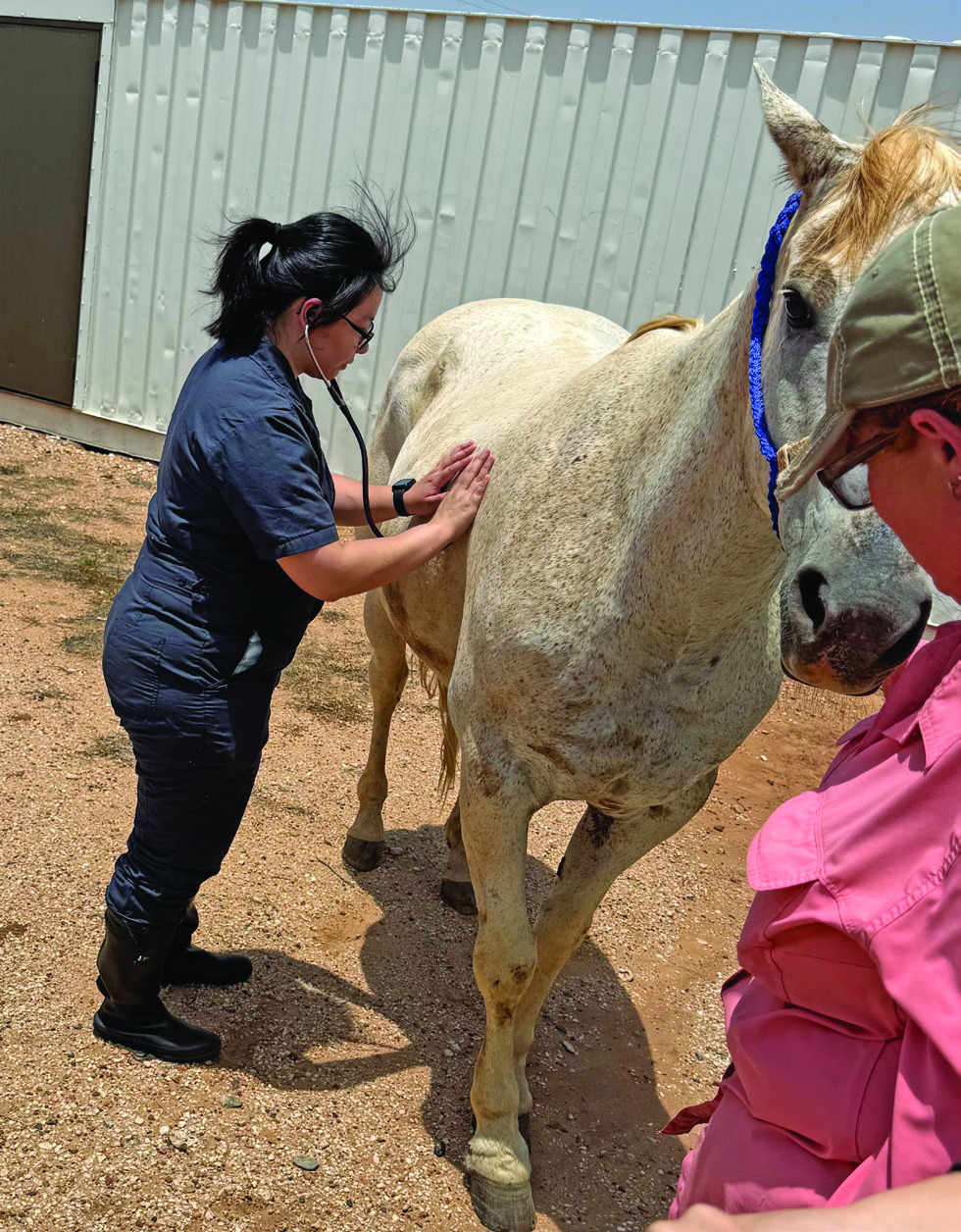
Rotan Veterinary Clinic welcomed Texas A&M veterinary students Thomas Payne and Sabrina Lee for a two-week internship this June, giving them a chance to trade textbooks for real cases and to experience the deep personal ties of rural veterinary care.
The internship is part of Texas A&M’s Rural Veterinary Practice Pre-Clinical Internship Program. Students are paired with small-town clinics across the state to experience both the medical and personal dimensions of working in a community where veterinarians often wear many hats.
Sabrina Lee, who grew up in Taiwan before moving to Plano, said it was the first time she had seen how tightly knit a rural town can be. She noted how people know one another’s family trees and how relationships extend beyond the clinic’s walls.
“I was very surprised with that,” she said. “Some client comes in, and they have some money problem, and another person say, ‘Oh, we can put them on our account.’ … That’s not going to happen in the big city.”
Lee was pleased to contrast the more personalized pace of rural care with what she’s seen in urban practices, where appointments are often brief and transactional. “I think it’s the time that’s given to clients really,” she said. “Because if you go to a larger city, or even a corporate practice, you have a 15-minute time slot.”
Fellow intern, Thomas Payne agreed with Lee, adding that in more fast paced urban environments, time constraints don’t often allow for relationships to develop. “They see your pet, they give you a diagnosis, recommend a treatment, take your money, you’re gone,” he said.
Payne spent summers helping at his grandfather’s mixed animal veterinary practice in Watertown, South Dakota. If you count the surrounding farms, it’s a town of about 20,000. His small-town foundation, coupled with a career in special forces and business, helped him appreciate the unique bond between vet and community.
He recalled how longtime clients remembered him from when he was a child, during a recent return to assist with his grandfather’s practice. “That’s what I mean by a small-town veterinarian having such an impact on people’s lives,” said Payne.
Lee’s path to veterinary school took a different course. In Taiwan, she explained, academic achievers were directed toward human medicine, so she set aside her childhood dream. But after immigrating to the U.S., she discovered a new route.
“When I was little, I always wanted to be a vet because like I pets,” she said. “Of course, I didn’t have any pets, but my friends had a lot of pets.”
She credited the American education system with making that dream feel possible again—particularly the way it looks beyond just academic grades to consider character and purpose.
“I can be a vet here,” she said. “I just need to finish the prerequisites and also get some experience to get into the best school… So, I did” Once enrolled at Texas A&M, Lee chose animal science as her undergraduate major.
She described herself as an introvert who once thought veterinary medicine might spare her from regular human interaction— until real-world experience proved otherwise. “So, coming out here is expanding my comfort zone with dealing with people because there's more time to have that interaction,” said Lee.
While initially hesitant about communicating with clients, Lee said her time in Rotan changed her perspective. With each case and conversation, she began to find a sense of purpose in helping people through their connection to their animals.
One of the more memorable moments came from an unexpected experience in the field. It began as a routine learning task but quickly evolved into a real-world scenario requiring critical thinking and follow-through.
In the end, the case turned out to be more complex than expected, giving both students a firsthand look at how unpredictable veterinary care can be.
It served as a reminder that medicine often doesn’t follow the textbook. Lee said, “Until you experience it one time, you're just not going to know.”
Payne was also appreciative of his experience, saying Texas A&M works hard to match interns with compatible clinics and doctors.
“They do a pretty good job because I’ve enjoyed my time here,” he said. “They want the program to be a success, and there’s a shortage of rural veterinarians.”
Lee said while she’s still weighing her long-term path, her experience in Rotan left a lasting impression. She expressed appreciation for how community bonds shape the work and spoke openly about how the culture of trust and closeness was something she hadn’t encountered before.
She said the chance to connect with people on such a personal level, getting to know families, neighbors, and hearing the stories behind their animals. Lee said it has given her new perspective on what rural practice could offer.
For Payne, who once imagined a very different life in uniform or at a desk, the return to veterinary roots felt like the most natural next step. What started as a summer job with his grandfather had become a calling that felt closer to home than anything else.
Over the course of two short weeks, the Rotan Veterinary Clinic offered more than hands-on training. It provided a window into a deeper kind of care, where trust and connection are just as important as acquired skill. Dr. Burk summed up its purpose: “I want them to know that a veterinarian can thrive in a rural mixed practice, and be an important part of the community as well. It’s rarely boring! Hopefully they leave knowing that it is a viable career option with the opportunity to practice good medicine and be accepted and appreciated.” His words make it clear that A&M’s Rural Veterinary Practice internship matters not only for students’ résumés but for the heart and health of small-town America, where relationships shape both medicine and the values that guide future careers.