
When Fisher County Officials met earlier this month to approve the county’s proposed budget and tax rates, commissioners spent roughly six hours working to uncover necessary funds to keep the county jail open without causing tax increases. While the focus has been on recalculating budget figures, the DMC contacted the author of the controversial county budget for some financial clarity.
Fisher County Judge Ken Holt admitted he knew that proposing an annual budget that would effectively close the county jail would be controversial to many people. However, in the weeks since he published his proposed budget at the end of July, Holt has faced few public questions about his proposed budget cuts or why he sees closing the jail as the best course of action for the county.
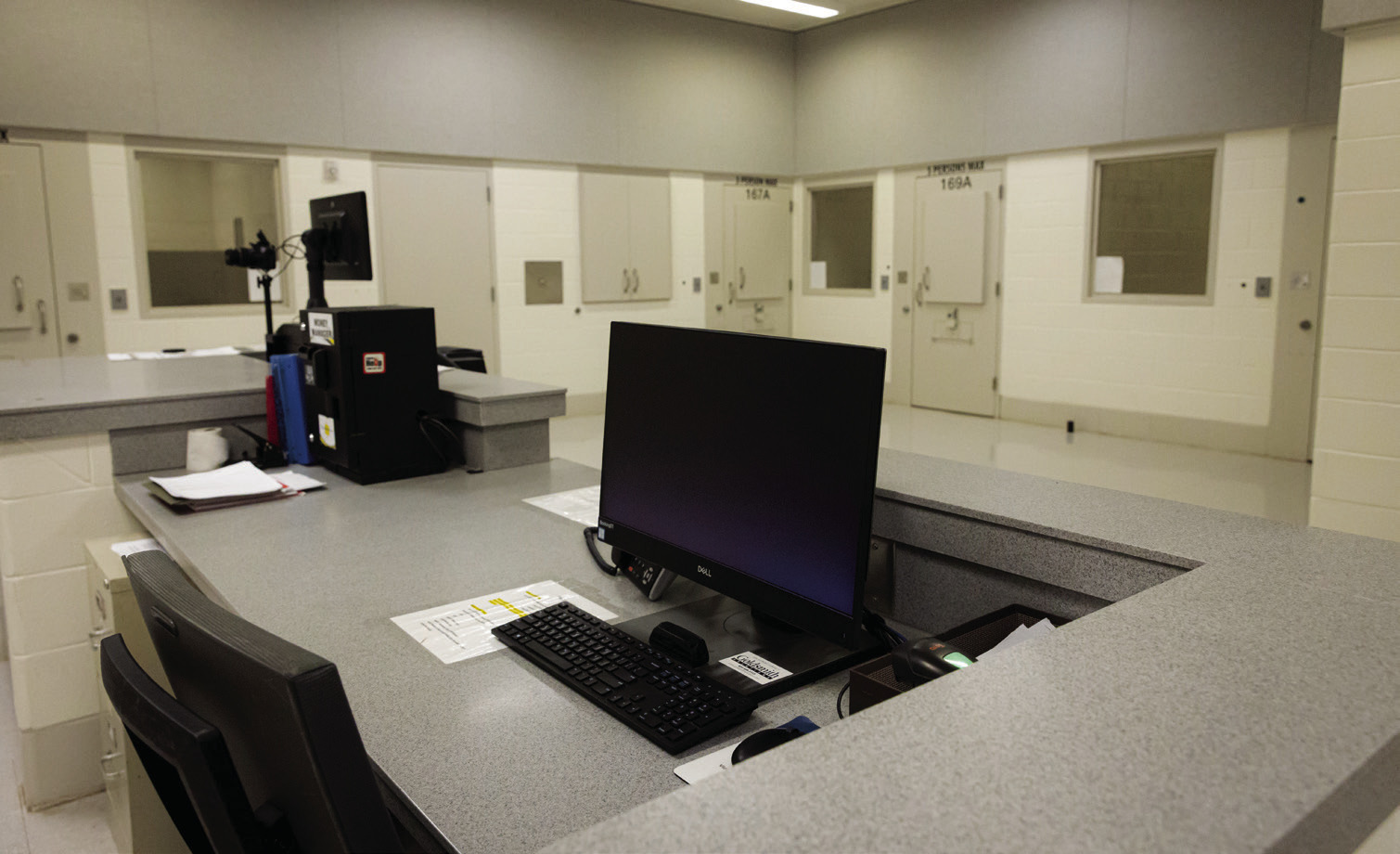
In an interview with the DMC last week, Holt explained that since opening in 2016 the jail has been depopulated multiple times due to staffing shortages, on two occasions for longer than 12 months. As the county jail moves into its ninth year of operation, it currently sits empty with the county’s inmates being transferred to one of two neighboring counties.
“We’re funding those 10 people. Regardless,” said Holt, pointing out that the county covers employee salaries despite the lack of inmates. “Would it be nice if we could keep it open? Absolutely. But when you can’t, year after year you’re funding 80 to 90 percent of the help, with no inmates. That makes absolutely no sense.”
The Fisher County Jail closed its doors to inmates for nearly 18 months between 2019 and 2021, and while not as long as that time, Holt said he doesn’t think most people are aware that the jail has already been closed for the past 13 months. Due to low staffing numbers and to avoid being non-complainant with the Texas Commission on Jail Standards, in July 2023, former Sheriff Simon Wade voluntarily “depopulated” the county jail, meaning that Fisher County began transporting its inmates to neighboring counties for housing purposes.
“Closed or depopulated, call it what you want [Jones and Scurry County] is housing our inmates,” said Holt, adding that given the cost of housing inmates in another county as opposed to failing to keep the local facility open seems a wiser use of taxpayer money.
In 2023-2024, Fisher County budgeted $1.03 million for the law enforcement center’s annual operations. Holt’s proposed budget 2024-2025, would effectively suspend operating the county jail and reduce the facility’s overall budget to just over $500,000.
Through August, the county has spent roughly $38,000 to house inmates out of the county, which Holt anticipates being closer to $50,000 by the end of the fiscal year. With this logic, Holt said the county saves $500,000 by closing the jail, and in return spends $50,000 for another county to provide the service.
“With your tax dollars, you spend 50 and you get 500 or you try to save 50 and you spend 500,” said Holt. “So, from a budgetary standpoint, that makes zero sense to me.”
When meeting with officials earlier this month, Sheriff Tom Pohlman pointed out that one of the primary responsibilities of a county sheriff is to operate a county jail, one he reminded the court voters approved the construction of by majority vote. Additionally, Pohlman said there were some judicial requirements that would be more easily met with a jail operating within the county.
Holt said he was unaware of any legal liabilities the county might face if closing the jail but was certain that any judicial needs could be met, as those procedural requirements have been fulfilled during the past 13 months, even as the jail has not been operating.
“I can’t believe that we would be the only county, out of 254 counties, without a jail,” said Holt, saying that instead of fully funding its operations only to have intermittent results, regroup and figure out a new plan. “You can’t guarantee anything. But here is what I do know because I've done P&L statements all my life: 2 + 2 doesn't equal 7 no matter how much you wish it, no matter how much you want it, it doesn't work.”
While the Sheriff and commissioners alike agreed they would like to see how the anticipated $250,000 in funding through SB 22 might be applied, Holt said even those funds could better serve law enforcement than being used to fund the jail.
“The problem is not the sheriff’s office. It is the law enforcement center,” said Holt, saying that his focus with the proposed budget is to reduce wasteful spending, and allocating revenues and cost savings to increase the number of deputies would ease people’s minds.
“I think that the public, and I'm guessing here, would rather see more boots on the ground, more patrolman,” said Holt. “Do they really care that [inmates] are Jones County or Scurry County or Fisher County? I don’t really think that has a bearing. If you’re in jail, you’re in jail.”
However, even if Fisher County continues to house its inmates in neighboring counties, there is still a less than 10-year-old facility of which the county still carries roughly $4.6 million in bond indebtedness. Despite closing the facility, Holt also resists the temptation to use the county’s substantial surplus to pay off the note.
“Whether it’s Facebook warriors or people talking, they say: ‘We need to pay the bond off’... I agree,” said Holt, saying it should also be considered that the fixed interest rate the funds were borrowed at is currently receiving a significant return because of the current interest rates.
“Things are out of whack right now, and I get that,” said Holt, pointing out how the Fed has touted the possibility of reducing interest rates in September. “Things are messed up right now. Where can you borrow money and make money? It happens occasionally. It's happening now, so let’s leave it alone.”
First Financial Bank Manager Justin Holland — who manages the branch in Roby where Fisher County holds its accounts — explained the unique financial market. From school districts to counties and municipalities, government entities are limited when it comes to investments.
A common practice is to invest in certificates of deposit or CDs. However, when the return on CDs dropped, many entities looked to invest in alternative methods such as TexPool, one of the oldest and largest local government investment pools.
Holland pointed out that if an entity borrowed money at a lower fixed interest rate and invested it in a where it was receiving a higher interest rate, the entity would see a return on that investment. The roughly $4.6 million remaining in the bond was borrowed at a 2% interest rate, but the county is currently receiving a roughly 5% return on the interest-bearing account where those funds are kept.
Holt said that based on the interest rates experienced across the nation last year, Fisher County generated roughly $400,000 in interest earned from its investments, including the bond account. Although the county retains enough reserve funds to cover the debt now, he said there is no reason to do so until the market changes.
“It’s ridiculous to pay to pay a note off. We’re making money on borrowed money,” said Holt. “When the time is right, we can stroke a check to pay the bond off, but now’s not the time.”
Nevertheless, whether left in place to take advantage of the unusual market or resolved after interest rates drop, the question of what to do with the facility remains. Holt admits that while he has explored some options, there is still a lot of discussion about what might be done.
As the facility was constructed to serve as the county jail, there has been some discussion that other counties, state agencies, or private operations could utilize the facility for a number of correctional purposes. However, Holt said he is open to suggestions for how the facility could be repurposed.
Additionally, Holt said he welcomed conversations about other areas where funds could be diverted to address other public needs. From assistance with building projects such as work at the rodeo grounds and show barn to community programs like Celebrate Recovery, providing funding opportunities is not uncommon for the county.
While Holt admitted he did not have any specific plans to earmark additional funding for these areas, he said he was open to hearing creative ideas from other community leaders. However, Holt also pointed out that these conversations are only possible should county officials agree to close the jail.
“If you keep it open, we’re either going to be in a deficit budget or we have to go up on taxes. That makes no sense to me,” said Holt. “I just don’t see it. There’s no reason for it.”
While acknowledging the controversial discussion surrounding closing the jail, another consideration Holt said drove his decision for his proposed budget cuts was to avoid unnecessary tax increases. He said continuing to increase taxes year after year to keep the jail open — which remains closed — when taxpayers are already paying on a bond makes little sense.
“The litmus test is this: If this was yours, ‘your’ business, ‘your’ county, ‘your’ jail, would you take the money out of ‘your’ pocket and put it toward the same decision? The answer is “absolutely no” if you’re being honest with yourself,” said Holt. “I’m not trying to sell it. I’m just telling you facts.”
As Fisher County officials continue to look at financial data and recalculate budget figures, no matter how the county commissioners choose to structure the upcoming budget, the deadline is only days away. Officials are expected to make the final decisions when the court meets again to formally adopt this year’s annual budget and tax rate on September 9.